DERAILED
ROLE
Junior Game Designer
DESCRIPTION
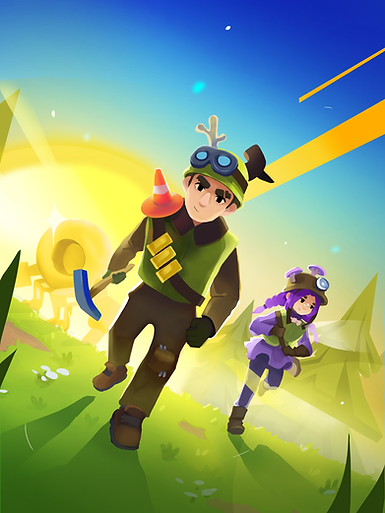
Derailed is a casual mobile game in the genre of Action-Adventure. The game is set in a post-apocalyptic world where you discover and explore many different environments (Levels). You harvest resources to progress through a tile-based level as you follow a linear questline. You will meet and encounter many unique characters, all of whom have special mechanics like crafting or trading. The player will progress their character through gear and weapon upgrades.
What I Did
Supported design documentation efforts by detailing key sections of the Game Design Documents (GDDs) used across multiple sprints. Ensured clear communication between Programming, Art, and Production by presenting the final GDDs to the full development team.
Handled the entire design process for multiple game levels, starting from initial ideation and spatial planning (level plans) all the way through to final implementation. This involvement included designing unique questlines and narrative elements, establishing level-specific economies, and placing/balancing resources and enemy encounters to ensure engaging combat flow
Drove data-informed level improvements by analyzing player analytics (e.g., churn rates) and qualitative player feedback. Delivered design updates to existing levels, successfully addressing identified churn points to increase player retention and enhance satisfaction in critical areas.
YEAR
2025
GENRE
Casual Action-Adventure Game
PLATFORM
Mobile (Android & IOS)
Game Engine
Unity
Downloads
100k +
My Work
Below, I will provide a detailed overview of the specific work I did for Derailed.



Lab Expedition
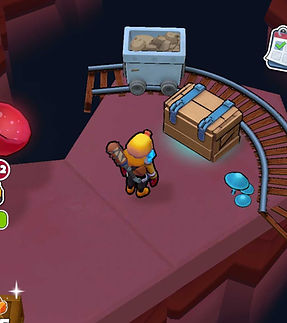
As a Junior Game Designer, I fully owned the design and documentation of the Lab Expedition, the second major content update (To be released), ensuring a fun and engaging player experience.
-
Pre-Production: Designed and documented the complete content package, including 9 unique levels (detailing level plans and objectives) and the full narrative quest line with dialogue.
-
Creative Vision & Collaboration: Created large moodboards for the environment and all new enemy types, providing clear visual and atmospheric goals to the Art team.
-
Feature Design: Introduced and balanced the "Keycard" mechanic, a new level feature designed to increase player engagement and boost replayability, which was an issue with the early game content.
-
UI Update: Designed necessary updates for the Level Select UI to clearly present the new level information
-
Presentation & Communication: delivered all final design specifications to the Lead Artist and Lead Programmer for production so they can get started and get work estimated for the rest of their team.
Level Plan
I created level plans to define environment setup, mechanic placement, and player progression across the new content. Each level was planned to be 8-10 minutes long with 2.5 hrs of full gameplay. The main goal of the sprint was to add extra content to boost Day 7+ retention.
-
Detailed Planning: Produced level-by-level plans (for 9 levels) that mapped the placement of key mechanics, including resources, enemies, chests, and indestructible props vital for pathing and objectives.
-
Art Collaboration: These plans served as the primary guideline for the Lead Artist to establish the core level geometry and environment setup.
-
Key Card Mechanic: Designed and implemented a color-coded Keycard access system (Blue, Yellow, Red) that visually gates levels, ensuring linear player progression and maximizing the value of the new mechanics. This mechanic was also added to boost replayability within the levels as players can replay earlier levels once they have achieved key card access in order ot open doors (match keycard access) which were previously locked.
-
Unique Design: Wanted each level to have a variety by designing each level plan to feature distinct spatial characteristics (e.g., narrow corridors vs. intimate arenas), maximizing the feeling of exploration.


Level Select User Interface (UI)
I designed changes to the level Select screen because I need that screen to house important information like keycard access and what resources can be found (level and doors) quickly for the player. This UI needed to be redesigned specifically for the lab expedition as it had to show different information compared to the cave level select UI.

In-depth Research and Moodboards
Below are the moodboards I created, which I presented to the art team to help give direction and deliver my vision for what atmosphere I wanted the lab levels to create. The Art team used and referenced these moodboards often when trying to figure out certain aspects of what they were creating for these levels. These were also done during the pre-production of the lab expeditions.
The main direction for the lab was inspired by labs in older SCI-FI films like Alien and 2001 Space Odyssey. This is because I wanted the lab to have an off white background and feel quite mechanical to help make the enemies and resources stand out, as this was the first fully interior environment, so we needed to overcome the challenge of making the level clear and easy for the player to navigate


GDD Sections
Below are the sections I wrote for the GDD and presented to the Lead Artist, Lead Programmer, Product, and other designers


Cave Expedition
The cave expeditions were levels that were separate from the core gameplay of the main level progression. I designed these levels to act as a change of pace, as they were on average 5 minutes long and had a more engaging level flow compared to the core gameplay.
I achieved a more engaging level flow by having lower resource tile requirements, which meant the players could progress faster. Also set out objectives that were dotted in locations within the level that gave the player a clear focal point throughout.
This was the first level and content task I tackled for Derailed

Cave Levels
-
Utilized Figma as the primary tool to plan the Cave Level's complete layout, including detailed placement maps for all tiles, resources, enemies, and interactive elements (chests, quest items).
-
Actioned rapid iterations based on team playtest sessions, specifically fine-tuning level features (e.g., enemy count and resource placement) to refine the pacing and flow.
-
Successfully delivered a fast and engaging experience, quantifiably proven by the levels achieving the lowest player churn rates on the team.
Cave Level 1 Plan

All Cave Level Plans

Cave Expedition GDD Section


The boss level was designed as an epic, two-phase encounter that shifts combat strategy.
-
Phase 1 (Stationary): The boss (large mushroom) is protected by four Fungi Roots placed in the level's corners. Players must use the familiar TNT mechanic (from Levels 8 and 9) to destroy all four roots, focusing primarily on ranged combat.
-
Phase 2 (Moveable): Destroying the roots triggers this phase, expanding the arena with new tiles. The boss becomes vulnerable (with a health bar), mobile, and utilizes a stomp attack, engaging the player in both ranged and melee combat.
Cave Boss Level
Boss Level Plan

Boss Level GDD Section


Train Station Level
I designed and implemented an important tutorial level and accompanying cinematic to address early player confusion, significantly improving player retention and narrative clarity.
-
Targeted Tutorial Design: Created the first tutorial level to provide a safe, 'hand-holding' environment for teaching core mechanics and progression loops. This decision was directly driven by external playtest feedback and footage showing initial player confusion.
-
Data-Driven Success: This short but impactful addition demonstrably reduced initial player churn. Post-implementation data showed players completing the level with a significantly better understanding of core mechanics and objectives.
-
Narrative Onboarding: Designed the entire intro cinematic, outlining the shots, pacing, and narrative beats. This cinematic was carefully constructed to be brief and impactful, immediately clarifying the main character's Goal and setting the stage for the rest of the game's story.
-
Competitive Analysis: The short duration of the cinematic was informed by competitor research (e.g., West Escape, Gold Rush), ensuring quick narrative delivery to reduce drop-off during the introduction.
Level Planning
I developed several tutorial iterations, ultimately pushing for the one that focused only on simple core mechanics. I believed this approach was crucial for player retention, and I presented this to the Product and Design Leads.
Since this was the game's first interior, I created many moodboards to establish the visual atmosphere I wanted this level to portray. I also tested various sizes and layouts to ensure the level flowed as I wanted it to, quick and simple.
When the Lead Artist was out, I stepped in and handled the bulk of the environment art implementation myself, to make sure the atmosphere was captured before the deadline.


Intro Cinematic
The intro cinematic had to be short and easy to understand, but I also wanted it to leave enough room for the player to have questions they wanted answers to, hopefully make them want to progress through the story.
I worked closely with the Lead artist on this as they were creating this cinematic. I outlined the flow for the whole cinematic, which included how shots popped into frame and what order they appeared in.


GDD Section
All of the above was shown in a Game design document for the sprint this was completed in. The section needed to have everything crystal clear, and all the important details needed to be present.
I also presented this sprint to the whole team


Other Works
Below are some of the other works I achieved while working on Derailed. Most of the work shows Figma mocks-ups and mooboards, which I used to help deliver each feature.

Dungeon Live Ops
Combat-focused Live Ops was a feature that product came to me wanting to add, which can be randomly generated and played infinitely
What I came up with is a Subway Gauntlet / Maze where the player has to fight their way through rooms full of enemies to reach the exit. There are many rewards to find along the way

Game Optismation
I optimised many areas of Derialed, based on analytic data as well as external and internal feedback.
This included the entire resource and economy optimization and level optimization.

Monetisation
A key part of each sprint was to either update existing monetisation features or add new ones. I designed a few that were added to the game. For each one I designed, I created mock-ups to help give the artists a good understanding of how it works.
I planned out a future monetisation feature that I wanted to add at a later date.


